Petra: Desert City That Blew Minds
Ever thought about building a whopping city right in a brutal desert? Seriously, think about it. Thirty thousand people, crazy rich, buildings just carved out of rock. Not just a city. A flat-out miracle, honestly. Welcome to Petra, the ancient spot that still makes jaws drop. History hums here. You can practically feel it vibrating off the sandstone! This ‘Pink City’ is something else.
Petra: The ‘Pink City’ Was a Big Deal
Before it became everyone’s travel dream, Petra was where the Nabataean kingdom lived. Not some tiny dusty place. Back in the 6th century BC, these nomadic folks, they landed perfectly. Right on the huge trade routes. Spices from India, cool stones from Africa. They ran the show.
And Strabo, an ancient historian, even wrote about how these tent-dwellers ended up with insane amounts of cash. Their big secret? Not just where they were. It was a ton of smarts. Pure grit. Others saw only barren land. But they built an empire.
Petra’s Comeback: Thank a Sneaky Swiss Guy
For ages, Petra was lost to the West. Just local Bedouin legends, whispers. Then, 1812. Johann Ludwig Burckhardt shows up. Swiss explorer, dressed like an Arab, calling himself Ibrahim. Heard stories of a hidden pink city tucked in the mountains.
His heart must’ve pounded. Play it cool. Too much European nosiness would wreck his cover. So, he just said he wanted to offer a sacrifice at a holy site. Real smart. Followed his Bedouin guide into a narrow canyon.
And get this: what he saw next, sunlight filtering through the rocks, was Al-Khazneh – The Treasury. A jaw-dropping facade carved with unbelievable precision. He barely scribbled notes, acting all chill in his journal. But he knew. He’d just found one of humanity’s biggest secrets. The forgotten city, thanks to Bedouin tales, was back.
Today? Millions journey to Jordan. To walk those same steps. To feel that exact awe in the 1.2 km winding Siq. Some spots narrow to just 3 meters. Walls soar 100 meters high. It’s still one heck of an entrance. Just like the Nabataeans wanted.
How Petra Got Water: Pure Genius
You want to talk about true grit and smarts? The Nabataeans mastered water. A region getting just 15cm of rain a year. They built a city for 30,000 people. Not just impressive. It’s a straight-up engineering miracle.
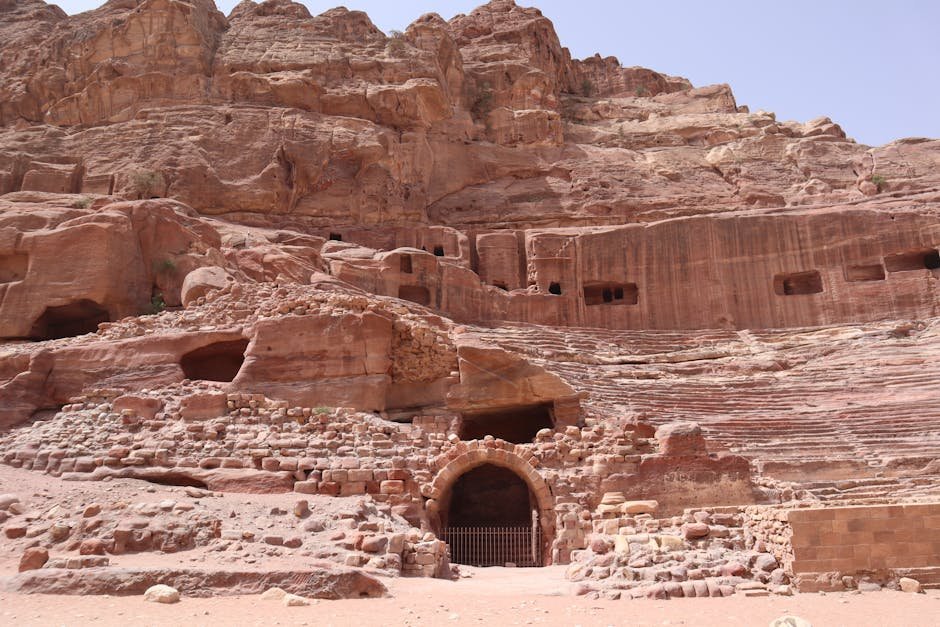
Archaeologists found this whole thing: over 200 water cisterns, hundreds of channels carved right into the canyon walls. Plus, super filtration. Every single rainwater drop was grabbed, saved, moved around smart. One side of the Siq for fresh water. The other for rainwater. It was a desert oasis. Built by human will.
And another thing: as you walk the Siq, keep an eye out. Niches carved in the rock. Those used to hold sacred stone blocks, Betyls. Nabataean traders prayed there before their long trips. Some even still show faint traces of old writing.
Petra’s Buildings: Art + Brains
The Nabataeans? Not just water engineers. Top-tier architects. And because it’s soft, workable sandstone, they picked this exact spot. Their technique? Draw the whole design right on the cliff face. Then carve down. Boom. No rain damage. Easy cleanup. Al-Khazneh, 40 meters high, a prime example of this top-down carving wizardry.
The facades, like that iconic Treasury, mix local ideas with Greek and Roman styles. Eagles, lions, mythical stuff. Even fancy plant designs from the Mediterranean world. Roman architect Vitruvius even bragged about Nabataean architecture. No kidding.
But check this out: their buildings weren’t just nice to look at. Dr. Hannah Friedman from Brown University figured out Al-Khazneh’s front lines up perfectly with the sunrise. Only two days a year. Right on time for important religious festivals. The Monastery, Ad Deir, also lights up special during the winter solstice. This level of star-gazing precision? Hella smart. Even now.
Petra’s Daily Life: A Whole Vibe
Forget some drowsy desert town. Daily life in Petra was a serious party. The colonnaded street, dug up recently, wasn’t just a road. It was a huge outdoor mall. Ceramic bits, trade inscriptions found there? Prove it. We’re talking silks from China, spices from India, African ivory, pricey gems. All traded right there. They even found old perfume bottles in the shop ruins.
The 7,000-seat amphitheater? Not just for shows. A big community meetup spot. Plays, poetry readings, music. And you know, sound engineers figured out its acoustics were so good, you could hear the stage from way up top. Clear as a bell.
And when those giant caravans rolled in – sometimes 100 to 150 camels strong – the city just popped. Special spots outside the main city had huge stables, storage places, guesthouses for all the merchants. Every arrival? It was a festival. Celebrations everywhere.
Petra’s Decline: Earthquakes & Other Woes
Nothing lasts forever. Not even a desert marvel. Rome took over in 106 AD, but Petra stayed rich for a bit. The real turning point? A massive earthquake in 363 AD. Total mess. Wrecked a bunch of that amazing water system.
Then trade changed. By the 4th century AD, sea trade by way of the Red Sea just got bigger. Slowly, Petra’s commercial magic faded. By 700 AD, it was just a shadow. Small place.
But here’s the kicker: not totally abandoned! Excavations from 2016 found Byzantine pots. Islamic coins, too. Proof a few people stuck around for centuries. Local Bedouin tribes, like the Bani Utayha, lived in the caves around Al-Khazneh until the early 1800s. Keeping the stories alive. The decline was a complicated mix of earthquakes, changing trade, politics, and even climate trouble. Droughts from the 5th century? Probably finished off those damaged water systems for good.
Petra Today: Still Spilling Secrets
Even now, Petra keeps giving up its secrets. In 2016, a drone survey by National Geographic found this massive platform. Football-field sized. Right in town! Nobody had ever noticed it before. Archaeologists think it was a big area for ceremonies.
And get this: the Nabataeans even designed their buildings to handle earthquakes. Research at Jordan’s University of Science and Technology found lead plates in the foundations. Like natural shock absorbers. Same kind of tech we use now!
Unfortunately, being popular has costs. Over a million visitors a year (1.13 million in 2019, to be exact). The old paths are wearing out. Moisture, vibrations? Causing damage. Sustainable plans, with UNESCO support, are trying to save this irreplaceable chunk of history. Standing before Al-Khazneh at sunrise, you can almost hear the caravans. The haggling. Ancient laughter. Such a reminder of human potential. Always.
FAQs
Q: Who found Petra again for the Western world?
A: Johann Ludwig Burckhardt, a Swiss explorer. 1812. Guided by local Bedouin legends.
Q: How did the Nabataeans manage desert water?
A: Super smart systems! Over 200 cisterns, lots of channels, filtration. Supported 30,000 people. With only 15cm of rain yearly.
Q: Why did Petra decline?
A: Big earthquake in 363 AD. Trade routes shifted to the sea. Less important. Plus, droughts from the 5th century. A messy end.