Space Shuttle History: From Cold War Dream to Tragic End
A winged marvel slicing through the blue, or just a flying coffin? For decades, everyone was hyped about the Space Shuttle. Its one-of-a-kind design, a symbol that showed off American smarts, seriously captured millions who watched in awe. But this wild Space Shuttle History is a complicated story. Real high highs, devastating lows. Just a crazy, intense ride.
From Espionage to Exploration: The Cold War Origins
The whole idea of a reusable spaceplane? It wasn’t just about science. Nah, it was born right in the thick of the Cold War. Way back in the late 1950s, the U.S. Air Force thought: “What if we had people up there? Snooping on the Soviets. Maybe even launching nukes from space!” Wild stuff.
Big aviation companies had ideas. But money ran out fast in ’61. The Space Race was on. Moon was the goal. Ballistic missiles and giant bombers took center stage for scaring off enemies.
But NASA. They weren’t giving up. By 1966, they were cooking up their own plan: a reusable ship! Fix satellites, haul stuff, get astronauts around. Maybe even build a space station. Pretty ambitious goal. The Air Force’s old ideas found a new reason to exist.
The Reusable Spacecraft: Design and Purpose
The Space Shuttle was meant to be a real beast of burden. Load it up! Five astronauts, minimum. Plus, twelve tons of gear into space. A lot of weight. This wasn’t some dinky two-person capsule.
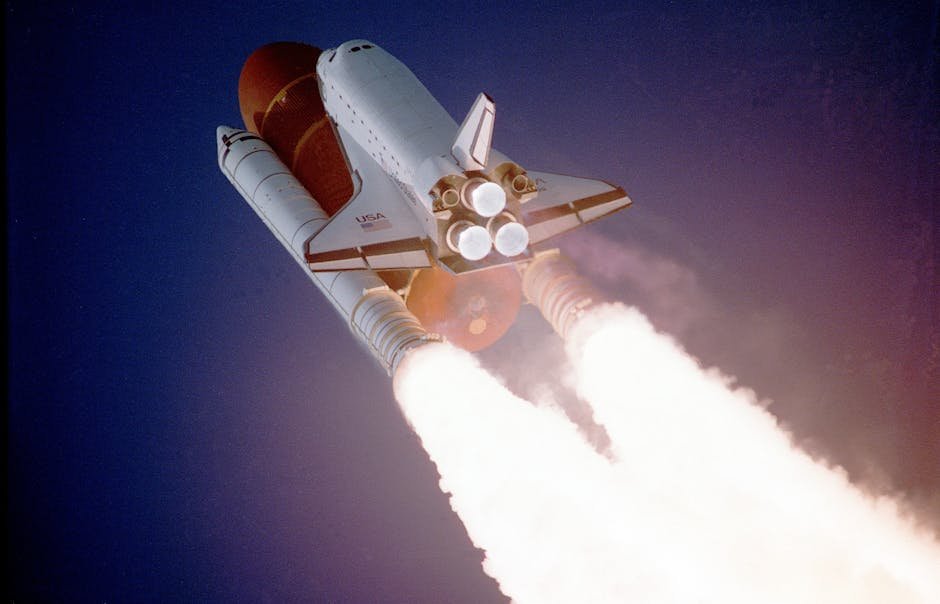
Sketchy at first. Just slapping it on a Saturn V? Nope. Too heavy, all wobbly. So, back to the drawing board for the smart folks. They ended up with that super recognizable setup: giant orange tank, two huge solid rockets blasting away, pushing that winged shuttle into space. Pure power.
The first one, Enterprise, never even made it to space. But hitching a ride on a Boeing 747 in ’77? What a sight! Gave them crucial info about flying in our air. Then Columbia, the first real one, went up in April ’81. Just two pilots. More than a flight. A huge win for the U.S. in the whole space race ego contest.
The shuttle itself? Could take seven people. And 27.5 tons of stuff! Launching satellites (hi, Hubble!) or fixing them with its robot arm. Super useful. It was huge for building the International Space Station, moving big pieces around exactly right. Before the ISS, it even had little labs for science projects on board. Really wild.
Engineering Pushed to the Brink: Costs and Risks
All those amazing launches? Yeah, that was “forced engineering.” Even way back in the 70s, people were saying they were asking too much of the tech. Seriously stressed. The whole point was supposed to be cost-effectiveness from reusability. Yeah, right.
But every flight? Almost a full rebuild. Those heat shield tiles, super important for landing safely, always needed checking. And replacing. Fancy new ceramics. Pricey. Not cheap at all. We’re talking $500 million to $1 billion per mission. Wild money.
The Disasters: Challenger and Columbia
The danger bits of the shuttle? They hit hard. Two disasters rocked everyone.
January 28, 1986. The Challenger blew up, just 73 seconds after launch. All seven people on board died. Christa McAuliffe, that teacher, gone too. So sad. What a mess. Turns out, a tiny O-ring seal in one of those big booster rockets failed. Cold day? It didn’t seal up. Hot gas leaked out, burned through the tank, and boom. Catastrophe.
Then, 17 years later, February 1, 2003. Columbia just broke apart coming back down. Another seven astronauts lost. Brutal. Some folks still argue about the exact reason – maybe space junk hit it? Or fuel caught fire inside? But most experts agree: a chunk of foam. From the big orange tank. It hit the wing on the way up. Left a hole. That tiny crack let superhot gases in during re-entry, melting everything down. Shuttle gone.
After Columbia, people weren’t seeing a marvel. More like a “flying coffin,” you know? Public pressure was huge. Time to end it.
A Symbol of American Prowess and Inspiration
Look, it had issues. People died. But this whole Space Shuttle History thing? Still a massive jump forward. A sci-fi spaceship, for real. Carrying a whole crew to orbit. And then coming back home. So cool. It looked like the Millennium Falcon or the Starship Enterprise, but it was real.
The program gave us tons of science chances. Pushed space tech way forward, too. Showed off American power worldwide, a real beacon. So many young scientists and engineers got inspired. Seriously. For a long time, it truly was the ultimate space exploration vibe.
The End of an Era and New Beginnings
Expensive. And those disasters? Yeah, that sealed the deal. Officially, they planned to quit when new ships were ready. But everybody was mad after Columbia. So they rushed the ending.
July 21, 2011. Atlantis landed for the last time. Program over. Done. And another thing: for almost ten years after that, American astronauts had to ride Russian Soyuz capsules to the ISS. Total bummer. But it kicked off building new commercial ships. A new way to fly.
Now? Companies like SpaceX, with their Dragon capsules, they’re taking over. Americans launching Americans from American turf. Finally! Different vibe than the shuttle’s cool wings, sure. But it’s progress. Big time.
Frequently Asked Questions
How many Space Shuttles were built?
Six total. Enterprise was first, just for air tests, never space. The five legit ones? Columbia, Challenger, Discovery, Atlantis, and Endeavour.
What was the approximate cost of a single Space Shuttle launch?
Crazy expensive. Each launch ran the U.S. government between $500 million and $1 billion per mission. Mind-boggling, really.
What were the main components of the Space Shuttle system?
Three main parts, basically: the orbiter (that winged ship), the huge orange tank (full of fuel for the orbiter’s main blast), and two solid rockets (for that initial ground-pounding lift-off). Simple.