Leonardo Da Vinci: The Dude was a Genius!
What’s the most you’d ever drop on a book? Thirty bucks? A hundred? How about $30.8 million? That’s what Bill Gates paid back in 1994 for one of Leonardo Da Vinci‘s notebooks, the Codex Leicester. Why that kind of cash? Because Leonardo Da Vinci wasn’t just good, he was hella revolutionary. His mind, his art, his sheer inventive genius still blows minds centuries later, making his life story a wild ride. The whole vibe around what he did? Something else.
Leo’s Early Life and What Shaped Him
Born out of wedlock in 1452, near Vinci, Italy. Unconventional beginnings. And his father, Ser Piero, was a busy lawyer and notary, who eventually had seventeen other kids with different women. His mother, Caterina, a farmer, maybe even a North African slave, or simply a 16-year-old orphan kinda rushed into marriage right after Leo showed up.
Leonardo spent his adolescence hanging out with his father’s family, finding a total legend in his nature-loving uncle. But get this: before he was an inventor or acclaimed artist, he was playing the harp. Seriously. Even wilder? He skipped formal schooling entirely. No proper schools. Imagine that: a total engineering genius who had no clue about heavy-duty math or physics until he was practically middle-aged. Wild, right?
Art Started with Verrocchio
So, his dad saw the raw talent. Hooked him up with Andrea del Verrocchio, basically the best sculptor-painter around. Only 15. Joined Verrocchio’s place in Florence. And guess what? He learned he could use both hands. Ambidextrous! Writing left, drawing right. Super rare skill, only like 1% of people have it.
People said he was pretty sharp-looking. Even posed for Verrocchio’s famous “David” sculpture. Most kids would bail after a few years. But Leo stayed for ten years straight. Learning it all.
Masterpieces, Even With Drama
Florence back then? Not always comfortable. At 24, in 1476, arrested for something serious: sodomy. Death penalty territory, that was. No witnesses, though, so it got dropped. But people say it really messed things up with him and his dad, big time. Two big projects came his way then: the “Adoration of the Magi” and another church piece. Both incomplete, naturally.
Then, 1483. Milan bound. Maybe he liked Milan’s smarty-pants vibe. Or maybe, just maybe, he needed to ditch Florence’s gossip. There, he became the Duke’s main man: engineer, painter. Quiet guy, but nice. Planned huge court festivals. Also, shared his smarts on everything from buildings to war stuff. Seventeen years in Milan, though. Seven paintings done, stuff like “Virgin of the Rocks.” And that one? It caused a crazy ten-year lawsuit plus a re-do.
After all that, “The Last Supper” happens. 1495 to 1498. That fresco in Milan? Total Dan Brown fodder. Jesus telling his guys one’s a traitor. Deep stuff. Expressions. Knife hand? Moneybag. He also painted ceilings at Milan’s Castello Sforzesco. And started this immense, five-meter bronze horse… for Francesco Sforza. Twelve years on just the clay model. But war! Bronze gone for weapons. Major bummer.
The Mona Lisa Riddle
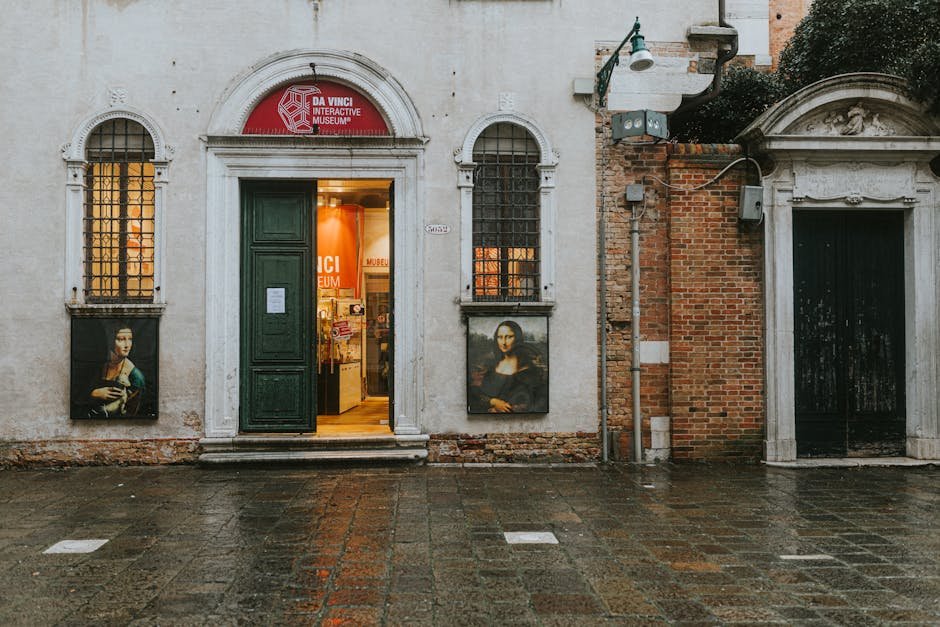
French invaded Milan, 1499. Da Vinci bounced. Ended up in Florence. And there, 1503 to 1505, boom: “Mona Lisa.” His masterpiece. Not just a pretty face, either. Epic. Revolutionary? Sure. First time ever, he put a whole complicated outdoor scene behind a portrait. Big deal.
Plus, that sfumato trick. Smoky blend of colors. Makes it totally elusive. Edges just disappear. And the smile? Still makes everyone scratch their heads: Who was that woman? Theories fly: Lisa Gherardini, wife of some Florentine merchant (even though he never actually bought it)? A courtesan? Or, even wilder, one of his guy apprentices, Salai? The not-knowing? Just boosts the legend. Totally.
So Much More Than an Artist
Yes, the famous paintings. But Da Vinci? Way more than just a painter. Dude drew up bikes, planes, choppers, parachutes – centuries ahead of their time, seriously. Ahead of his time. As Sigmund Freud famously put it, Leo “woke a bit too early in the dark, while everyone else was still asleep.”
He loved fiddling with stuff. Countless hours outdoors, testing ideas. Figuring out how everything actually worked. Obsessed. Not a hobby. A full-on mission.
Cutting Up Bodies and Deep Science
And his drive to get how life works? Led him to something wild: cutting up dead bodies. Over 30 dissections, folks. Drew every last bit. Documented everything. His body drawings? Mind-blowing. A totally new level of human body intel back then. Because of that hardcore science, his art looked real. Seriously.
For Leo: art and science? Same thing. Two sides of one coin. Painting, though? That was the big illusion. Needed solid math, good vision stuff, to squish three dimensions onto a flat surface. More than just paint. Understanding reality to flat-out remake it. Pretty wild.
French Retirement and Lost Grave
1516, Leo left Italy. For good. France. King Francis I, a total fanboy. Gave him the top job: “chief painter, architect, and engineer.” Final years? Chill at a sweet mansion called Château du Clos Lucé, near Amboise.
Died 1519, age 67. His main student, Francesco Melzi, was right there. Melzi? All polite and educated. Total flip side of Salai, his longtime “little devil” student. Salai split for Milan a year prior. Will divided his Milan land between them. Melzi got the mansion and everything else. Buried near Saint-Florentin church. But then French Revolution. Boom, gone. Exact resting spot? Who knows. Lost forever. Wild finish for a wild man.
FAQs (Quick Hits)
Q: What’d a Da Vinci notebook fetch?
A: Bill Gates grabbed the Codex Leicester in ’94. $30.8 million. Seriously.
Q: Anything weird about Leo’s childhood or school?
A: Yeah. Born out of wedlock. No real formal school. And even though he was a genius later, deep math and physics? Didn’t click till he was 30-ish.
Q: Why’s Mona Lisa such a big deal, exactly?
A: Tons of reasons. First off, he put a complex, real-deal landscape behind her. Revolutionary. And that sfumato trick? Super soft blending, smoky effect. Makes it look like magic.