Harley-Davidson’s Origin Story: Fueling California Road Trips
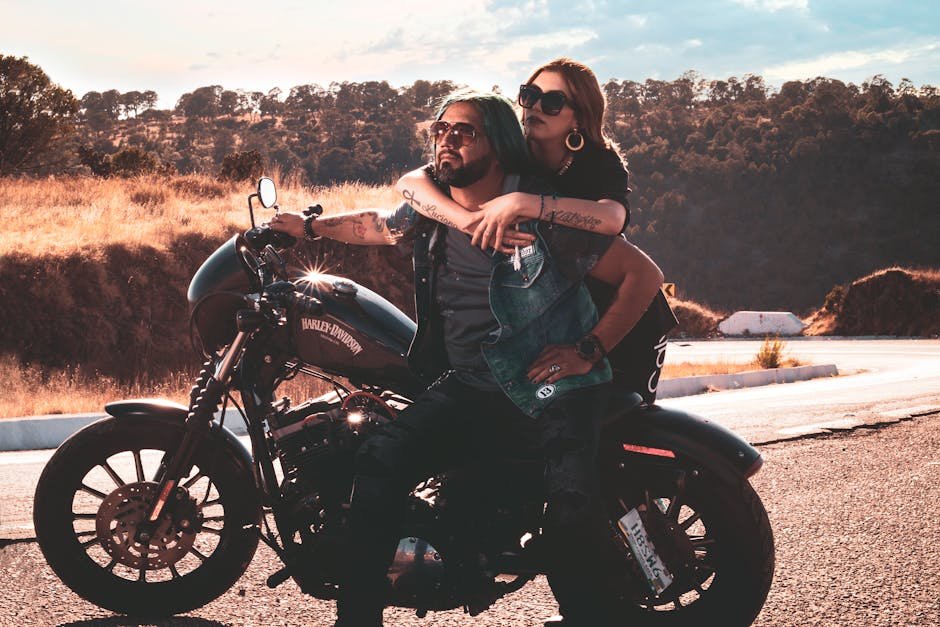
Dreaming of epic Harley Davidson California rides? You’ve definitely seen them. Roaring down the PCH. Kicking up dust in the desert. Carving through mountain passes. These aren’t just bikes in the Golden State, no way. They’re a whole vibe. A lifestyle. But how’d this American legend even kick off before that engine hummed across our gorgeous landscapes? It didn’t start on some legendary highway. Or under the California sun. The real beginning? A vaudeville performance. You heard that right.
The Vaudeville Spark: A Motorized Vision
Picture it: early 1900s. William Harley and Arthur Davidson. Two young guys, big ideas, hitting a vaudeville show. Helen Held, big-deal performer, was up there on stage, mesmerizing everyone. But our two guys? Nah, they weren’t just charmed by her. Not at all. Their eyes were locked on a single-cylinder, three-wheeled motorized contraption. It was supporting her act.
Boom. That little machine ignited something. And another thing: while everyone else was just staring at the star, Harley and Davidson? They saw the future of getting around. Like, the ultimate “aha!” moment. A tiny detail, seems like nothing, but it definitely set their friendship on a collision course with destiny. Kicked off one of the biggest, most iconic brands in motorcycling history. Totally wild.
Backyard Beginnings: A Little Shed in Milwaukee
So, 1901. Harley was already an apprentice draftsman, messing around with putting a motor on a bike. But he wasn’t alone in this. Arthur Davidson joined in, and then things got serious. Their first “factory”? Right. A tiny wooden shed. Stuck in the Davidson family’s backyard in Milwaukee, Wisconsin. Talk about super grassroots innovation.
They even wrote a bold message right on the door. Staking their claim. Because back then, a bunch of other folks were already trying this motor-bike thing. So these guys knew it. They just had to be better. Arthur, a year younger than Harley, was a little wilder. Loved to fish out in Wisconsin’s open land. Pedaling long distances? Not ideal at all. A motorized bike? Yeah, that sounded like a damn good time.
Powering Up: Fixing Early Problems
Their initial design? It had a 116cc single-cylinder engine. Simple enough. You could attach it to a bicycle pedal. Arthur’s brother, Walter Davidson – dude was a railway machinist – they brought him in. Promised him he’d be the first to ride their new machine. Funny thing, though: Walter shows up. Guess what? Bike wasn’t even built yet! Classic.
That first prototype model? Honestly, it was pretty weak. Hit even a slight hill? The rider had to pedal like crazy. The engine just couldn’t handle it. This early flop was a huge lesson. Pushed the team to design a bigger, much more powerful engine. One that could ditch the pedals completely. And they did it.
From Wooden Shed to Concrete Giant: Growing Fast
By 1903, the combined work of five men – Harley, the Davidson brothers, their machinist pal Henry Melk, and young go-getter Ole Evinrude – resulted in the first proper Harley-Davidson motorized bicycle prototype. The company officially started that same year. They just kept at it, making their machines better and better. By 1906, they had a seriously reliable motorcycle. Climbed hills like a champ.
They sold almost 50 bikes that year. Super impressive for a wooden shed operation. So they got some credit. Bought land just a block from the Davidson home. Built a single-story wooden factory. This exact spot, believe it or not, is still Harley-Davidson’s main office today. Then comes 1907. William Harley, fresh out of the University of Wisconsin with an engineering degree, became chief engineer. Production then shot up to 150 bikes. And 1908? It tripled. 450 units. Selling machines to local police departments!
And another thing: by the end of that first decade, Harley-Davidson hit a major milestone. A new, sprawling, five-story concrete factory. Employing 149 people. Pumping out around 3,200 motorcycles. Per year! By 1915, they were cranking out over 16,000 annually. Yeah. From a shed. To this huge building. They were truly on fire.
Gearing Up for War: America on Two Wheels
Harley-Davidson’s story is totally woven into American history. So when the US entered WWI, the company’s production went through the roof. The military saw their motorcycles as agile stuff. Perfect for tough ground. Even moving wounded soldiers. The demand? Insane. The government bought over 20,000 Harley-Davidson Model J motorcycles for war stuff.
This massive distribution across the globe didn’t just boost their worldwide footprint. It also got regular folks heavily interested after the war. And WWII? More of the same, only bigger. Harley-Davidson supplied a crazy 90,000 military motorcycles to the US Army. They weren’t just making bikes. They were helping to equip a whole nation.
Riding Through the Storm: Innovation in Tough Years
When the stock market absolutely crashed in 1929, ushering in the Great Depression, a ton of companies just disappeared. Harley-Davidson saw sales plummet, from over 20,000 in ’29 to just 3,000 by ’33. Brutal times. But resilience? That was just built into what they were. They didn’t just survive. They changed things up.
In 1934, they put out new styles. This included the three-wheeled ‘Servi-Car’. Basically a tough cargo delivery vehicle. And get this: it stayed in production for 50 years. This broadening of their things was super important for them. It let them last. They were one of only two American motorcycle makers, along with Indian, to actually survive the Depression. Pretty wild, right?
More Than a Machine: Building a Way of Life
Beyond the engines and the steel, Harley-Davidson built something bigger. A whole culture. Way back, a dealer tossed out an idea: organize group rides. With customers. Sounded like a marketing gimmick. But it exploded into a worldwide thing! Creating this incredibly loyal community that’s still strong today. Because this wasn’t just about selling motorcycles. It was about selling an experience. A sense of belonging. Totally.
The brand expanded into clothes, accessories, and even toys. William Harley and Arthur Davidson might be gone now – Harley in 1943, Davidson, tragically in a car accident, in 1950 – but their legacy? Absolutely still here. Their brand went way past just transportation, carving out a super distinct identity in the motorcycling world. Recognized. Celebrated. Globally. That kind of dedication? Yeah, it fits perfectly with the freedom of Harley Davidson California rides, doesn’t it?
Frequently Asked Questions
Q: Where did William Harley and Arthur Davidson get the idea to start their motorized bicycle?
A: They saw a motorized, three-wheeled trike used in a vaudeville show featuring performer Helen Held in the early 1900s. Totally inspired them.
Q: Where was the very first Harley-Davidson “factory”?
A: Their initial work happened in just a wooden shed in the Davidson family’s backyard in Milwaukee, Wisconsin. Humble beginnings.
Q: How did Harley-Davidson manage to survive the Great Depression?
A: They stuck it out by putting out new models. Like the three-wheeled ‘Servi-Car’. That cargo vehicle greatly helped them broaden their products and bring in money during those really tough economic times.