California in Space: OSIRIS-REx and What’s Next
Remember playing tag? Turns out, some grown-ups are still playing that game. But with a seriously humongous target: asteroids. California Space Exploration isn’t just about sending rockets sky-high. Nope. It’s taking us humans into the universe, turning kid games into epic science projects.
California’s Big Deal Space Missions: NASA’s OSIRIS-REx (Think JPL!)
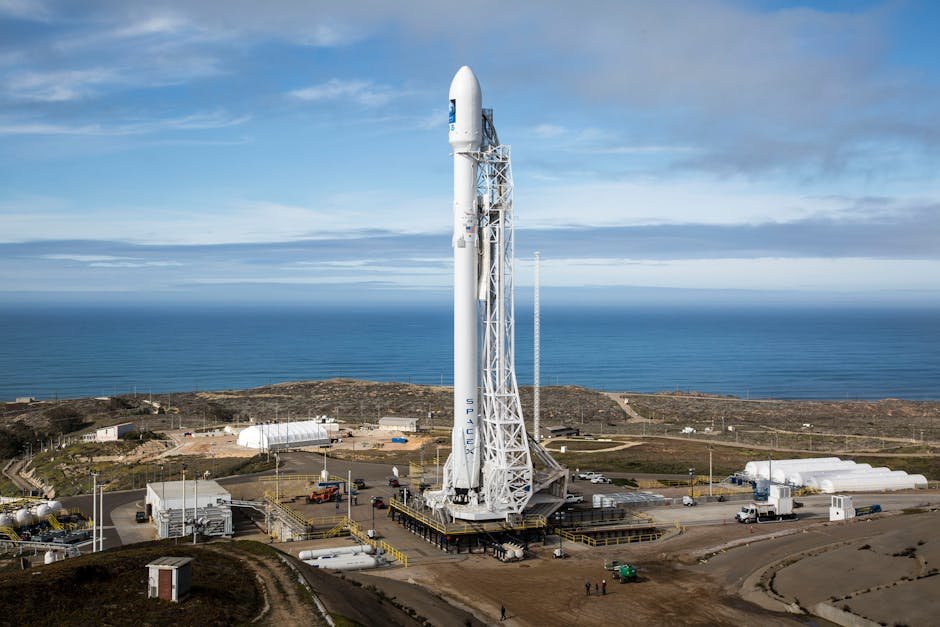
Okay, picture this: touching something 320 million kilometers away. Wild, right? The Jet Propulsion Laboratory (JPL) and NASA’s OSIRIS-REx mission did it. In 2016, this spacecraft, minivan-sized, blasted off. Target? Asteroid Bennu.
Because Bennu, that 490-meter rock first spotted by the Arecibo Observatory in 1999, is actually kinda scary. There’s a 1 in 2,000 shot it could hit Earth between 2175 and 2199. Uh, no thanks. So, we sent OSIRIS-REx. Its main gig? Snag a space rock chunk. Bring it home.
Scientists initially thought Bennu was smooth. Big surprise! OSIRIS-REx got there in 2018. It found a surface packed with giant rocks. Far more risky. So, the probe then spent over a year patiently mapping every five centimeters of Bennu’s surface for real. A map more detailed than Mars. Even our Moon.
On October 20, 2020, OSIRIS-REx nailed its “Touch-And-Go” (TAG) move. A robotic arm poked out, blasted nitrogen gas, and grabbed maybe 60 grams of cosmic dust and tiny rocks. This wasn’t some manual operation. And another thing: an 18.5-minute signal delay meant the whole thing had to run itself. The spacecraft tucked its solar panels, kinda like folding wings, not for cool Star Wars feels but for steady balance and protection heading down. It’s coming back now, samples riding along. Arriving 2023.
The Science Scoop: Asteroid Bits & Earth Life
Why bother with all that fuss for just 60 grams of space rock? Well, those Bennu samples could spill the beans on how life started on Earth. A lot of eggheads figure asteroids, like some cosmic “sperm” fertilizing “egg” Earth, dropped off organic compounds ages ago. Billions of years, even. Bennu might show actual proof. These samples? Super important.
Protecting Earth: California’s Role in Asteroid Watch
And yeah, beyond figuring out life’s secrets, knowing about asteroids is straight-up planetary defense. That 1 in 2,000 chance Bennu might smack Earth? NASA’s busy trying to find ways. Nudge these huge rocks away. Before they get too close. So, the experience from OSIRIS-REx is priceless for future missions, especially ones meant to bounce dangerous asteroids off course. California’s observatories and research places are totally crucial for tracking these space threats, charting their routes, and cooking up plans to keep our planet safe.
Getting Kids Excited: California’s STEM & Future Space Explorers
Guess who named Bennu? A middle school kid. Man, California isn’t just building rockets! It’s raising the next wave of space explorers. NASA gets students involved, from little ones naming asteroids to high schoolers figuring out experiments for the International Space Station. These are not just school projects. Colleges and unis all over the state run programs where students work on actual space missions.
Like Mehmet. He was on a university team. He helped design the thruster for a vehicle called ASLAN. Their mission? Find water ice on the Moon. These programs, active all over California, ain’t about just memorizing stuff. They’re about teams working together. Facing real engineering problems. And sparking the young minds who will run future California Space Exploration. That’s how you get people ready for missions that last half a lifetime.
Spotting Space Stuff: California’s Cool Places
Wanna see all this cool tech up close? California’s got some great hangouts for space fans.
The California Science Center in Los Angeles isn’t just where Space Shuttle Endeavour lives; it’s practically a gate to the universe. You can check out artifacts and exhibits from tons of missions. The Griffith Observatory, chilling above LA, gives you awesome views of the city and the stars. A solid spot to think about where we fit in the big picture. Also, local aerospace museums show off important mission bits, connecting you directly to the insane work happening all over our state.
Quick Questions
So, why OSIRIS-REx? What was the point?
Two main things. First, grab samples from Bennu. We’re talking origin of life stuff here, checking those organic compounds. Second, learn how to mess with scary asteroids. Super important for planetary defense.
How can kids get into California space stuff?
Lots of ways! California’s got tons of STEM programs for young people. Kids name asteroids. High schoolers design experiments for the International Space Station. And university students join teams doing real space mission jobs, like looking for moon water.
What was so special about OSIRIS-REx’s map of Bennu?
It made the most detailed map ever of any space rock. Like, ever. A crazy 5-centimeter resolution. Way more precise than any map we’ve got of the Moon. Or even Mars.