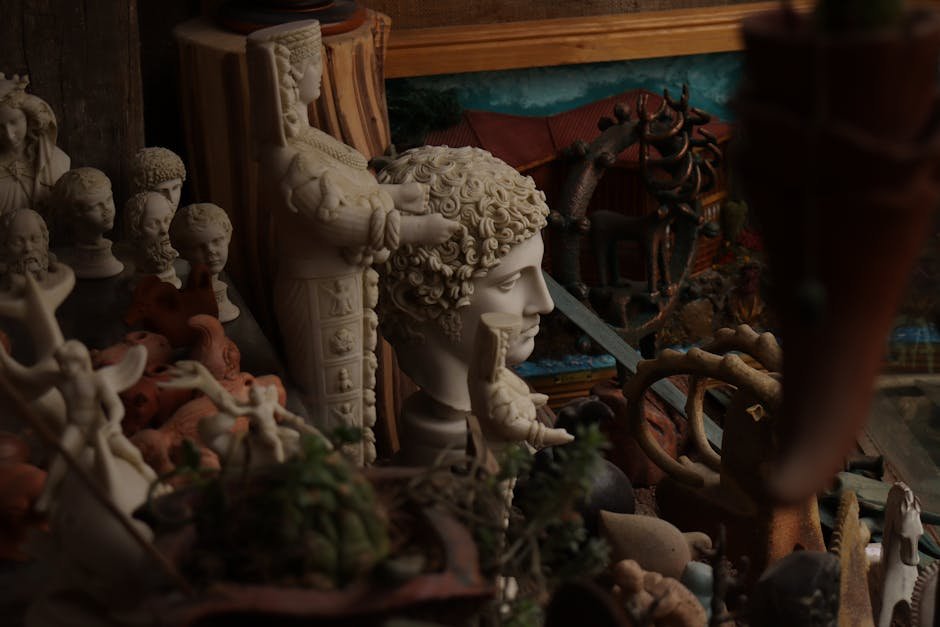
The Colorful Truth: Were Ancient Sculptures Really White? Uncovering Polychromy in Classical Art
You ever see one of those old Greek or Roman statues? Bet it’s all shiny, super white marble in your head, right? Totally stuck in our brains, that idea. But guess what? Many of those super famous Polychrome Ancient Sculptures? They were originally covered in wild, bright colors. Yeah, the whole art scene? Been wrong for ages. Big time.
The White Marble Myth: A Centuries-Old Deception
Most folks, they just assume classical statues, particularly Roman and Greek ones, were always white. Museums, books, postcards – always the same. Bare marble. No color. Even a fast search for “sculpture” online usually shows only plain, single-color stuff. Total monochrome. A deeply stuck idea. Not true at all.
Back when they first made this art, sculptors and painters? Totally teamed up. This thing called polychromy meant putting really bright colors on everything. Buildings. Small statues. You name it. Not just a quirky fad. Standard. For millennia. Thousands of years, man.
Aphrodisias: A Hub of Ancient Artistry
Curious where some of this incredible art came from? Just go to Geyre village. In Aydın, Turkey. You’ll hit the Aphrodisias ruins. Ancient city, six thousand years old. Crazy. This place was a really big deal. Seriously important sculpture hub. On the whole planet. Lots of statues in museums around the world? Yep. From Aphrodisias.
And the city’s “discovery”? Wild story. Legend says Ara Güler, a famous photographer, got totally lost doing a job decades back. Stuck in Geyre for the night. Think about it. 50, 60 years ago? No power. Just some old lamps. Güler said he saw locals. Playing cards. On ancient marble columns. In the pitch black. Cool story, right? Even if a bit jazzed up. Turns out, actual digs were happening way before his big “find.” And another thing: the city? Folks knew about it since the early 1900s.
Science Unveils the Hues: Beyond the Naked Eye
People argued about white sculptures since the 1700s, I mean, the 18th century. But new research, starting in the ’60s? Pretty much ended that debate. Shining UV light on these things? Total proof. They had color. Definitely.
Even with all this science, people still stubbornly think white marble is the only way. Trying to change that stuck idea? Tough.
Chromophobia: The Fear of Color in Western Art
So, why’s everybody fighting it? Some folks point to “chromophobia.” Basically, fear of color. David Batchelor, in his book, says Western culture usually hates color. Finds it trivial, unskilled, or just weird. Superficial, even.
Just think. Often, we think single-color art is fancier. More complex maybe. Black and white photo? Instantly cooler. More art. Fancy filmmakers? Go monochrome a lot. Even YouTubers try to look good. White T-shirts on dark backgrounds. Gives a vibe. Subconscious stuff. Cultural codes. That’s it.
Professor Mark Abbe, University of Georgia, highlights this put-down of colors. A huge misunderstanding in Western art history. Some historians just flat-out fight against putting the colors back on these statues. One guy, history buff, saw a colorful Emperor Augustus. Said it was like “someone wearing the clothes of the opposite sex and calling a taxi.” Crazy prejudice. Yep. Even from smart people.
Historical Bias and Propaganda: The Whitewashing of History
This whole preferring single-color art isn’t new. Renaissance artists in Italy, wanting to set sculptors apart from painters, loved that clean, pure white marble look. Big idea: ditch the past. Create their own art world.
And this “white marble ideal”? Not just good taste. It got political. Adolf Hitler, a fan of classical art, took it. Used it as propaganda. A weapon. Linked it to “whiteness superiority.” Twisted art into something really ugly. Hateful ideas. Horrible. Just a harsh reminder: art ideas aren’t always innocent.
Look, art and beauty, totally subjective. White, super colorful, whatever. But truth? Historical truth. That counts. Real beauty pops up when we’ll explore. Mix things. Invent new stuff. Instead of being scared of what’s, you know, just different.
Frequently Asked Questions
Q: So, why’s everyone stuck on white Greek and Roman statues?
A: Several things. Paint washed away over centuries. Left just white marble. Also, folks mistook history. Plus, later Western art just liked plain colors. Renaissance guys? They really pushed the unpainted look for statues.
Q: What’s ‘polychromy’ mean for old sculptures?
A: Polychromy is this old way of decorating. Bright paint. On sculptures, buildings, all kinds of art. Seriously. Many Greek and Roman marble statues? Had tons of colors. Not just plain white, like we thought.
Q: How do smart folks today know old sculptures had color?
A: New research methods. Especially UV light. Art historians and conservators use it. Finds tiny bits of original paint way deep in the marble. Shows, definitely, those ancient artworks were vibrant. Packed with color.